The Connection Between ADHD and Executive Dysfunction
Have you ever felt like the list of things to do keeps adding up in your head and your ability to handle them lessens? If…
In crisis? Call or text 988.
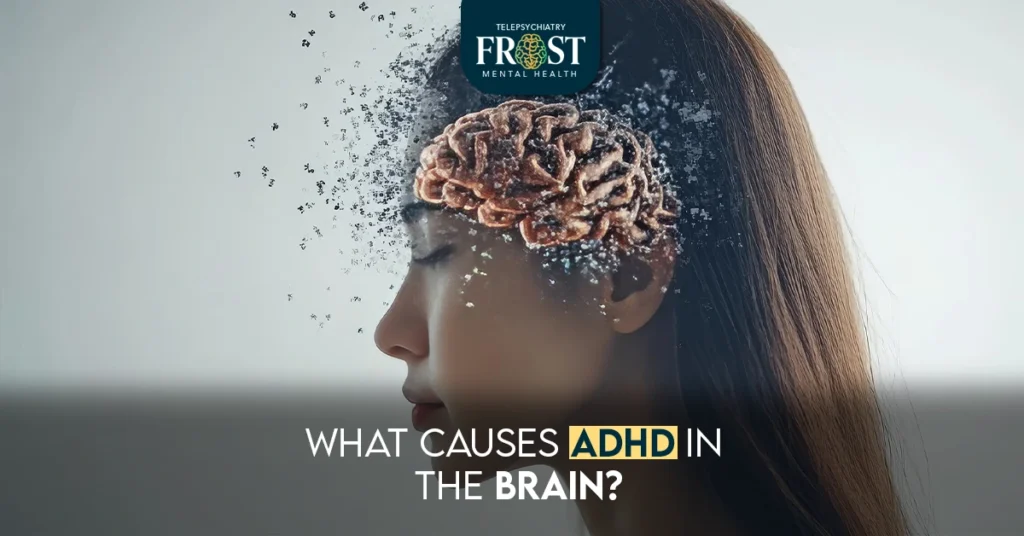
If you’ve been asking yourself what causes ADHD in the brain, you’re about to find that out.
ADHD isn’t just about being distracted or fidgety. Beneath the surface, there are fascinating brain mechanisms.
Let’s take a look at it all.
Often, yes. But there’s more to it.
Studies have shown us that heredity plays a leading role in ADHD development, so family history indicates the risk of its occurrence.
This also brings up an important debate—Is ADHD genetic or environmental?
Hereditary factors heavily influence ADHD creation, while toxins encountered during pregnancy along with pediatric diseases contribute to environmental risks for its development.
On top of that, the brain exhibits neuroplasticity, which demonstrates adaptiveness.
Even when a person has inherited or developed ADHD initially, the brain has the potential to transform through proper therapeutic approaches.
The main points follow in the upcoming discussion.
When we ask what causes ADHD in the brain, we’re really talking about structural brain variations alongside chemical neurotransmitters and neural communication pathways.
The answer to the question about ADHD being neurodivergent is affirmative.
Neurodivergence describes brain functioning variations, which include ADHD as one of its recognized forms.
Eventual processing and creative thinking abilities of ADHD patients function differently because they generate responses that people without ADHD wouldn’t normally consider.
But is ADHD a learning disorder? Not exactly.
The executive functioning capabilities of individuals with ADHD undergo disturbances without causing direct learning disabilities like dyslexia or similar learning-related challenges.
The academic impacts originating from inattention and hyperactive behaviors create the basis for many misconceptions.
Related: Is ADHD a Mental Illness or Neurological Disorder?
The symptoms of ADHD appear through various presentation styles.
Knowing how these differences present helps professionals determine the best approach for management strategies.
The three primary presentations are:
Individuals whose symptoms do not match the typical ADHD categories can receive an unspecified ADHD diagnosis due to their symptoms’ varying nature.
ADHD maintains a fundamental relationship with the nervous system.
People with ADHD experience high-stress situations because their body reacts powerfully to external stimuli, thus making it difficult to control their reactions.
The activation process in the nervous system leads to the emotional roller coaster effects that people with ADHD commonly feel.
High energy and frustration occur frequently because of this link.
Speaking of connections, ADHD and thinking form a direct association.
People who have ADHD usually describe their mental processes in terms such as “racing” together with “scattered” and “out of the box.”
People experience different ways of thinking: some view it as an organizational challenge, and others as a beneficial mental strength.
Patients who have ADHD display exceptional creativity as a common characteristic. Their unique way of processing information brings about exceptional innovative concepts.
When considering what causes ADHD in the brain, the answers aren’t as simple as a single factor.
ADHD stems from a combination of these:
It’s a condition rooted in the brain’s rhythms and shaped by our choices and the world around us.
People who face ADHD challenges likely wonder about their first steps.
Different therapeutic approaches together with modifications in lifestyle and medical options help people deal with ADHD.
Frost Mental Health supports people through specialized treatments that help them grasp and control their individual ADHD symptoms.
Get in touch today to learn more about how we can help.
Virtual appointments for adults in California & Florida. We reply within one business day.
Have you ever felt like the list of things to do keeps adding up in your head and your ability to handle them lessens? If…
Managing one mental health condition is hard enough for anyone. But what if instead of one disorder, your brain deals with two conditions at the…
While a lot of people know dopamine as the 'feel good' chemical, more people are not aware of its role in mental health.Precisely, there…