Can You Have ADHD and Bipolar Disorder? Understanding Coexisting Conditions
Managing one mental health condition is hard enough for anyone. But what if instead of one disorder, your brain deals with two conditions at the…
In crisis? Call or text 988.
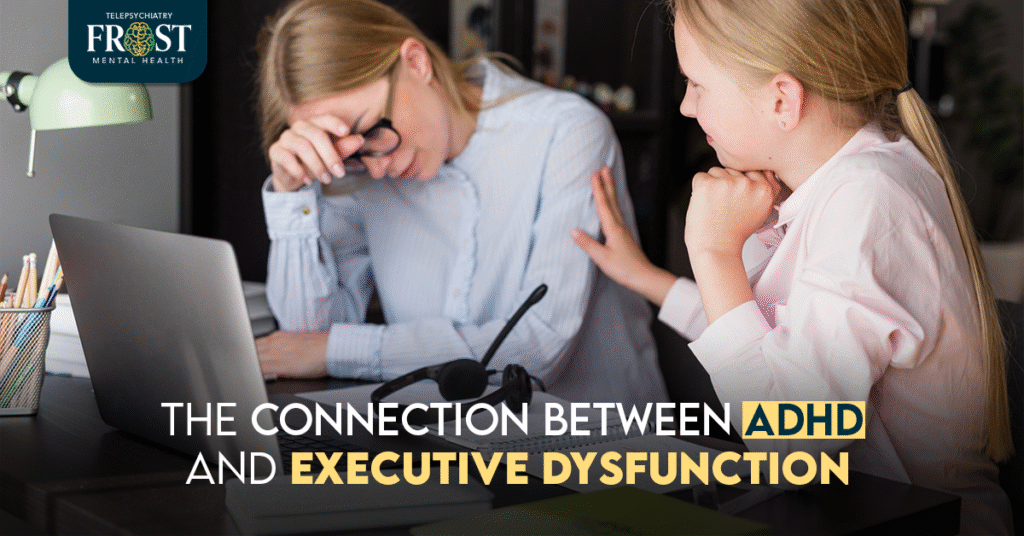
Have you ever felt like the list of things to do keeps adding up in your head and your ability to handle them lessens?
If you find yourself agreeing throughout, there’s a chance you’re experiencing executive dysfunction, especially if you have ADHD.
Having ADHD isn’t only about getting distracted or forgetting your belongings (there’s that too).
ADHD can also affect the executive functions of the brain, the abilities that help you organize your life, store important memories, and handle life as an adult.
Think of executive functions as your brain’s management team. They handle tasks like:
When these functions work well, life flows more smoothly.
Although executive dysfunction isn’t really an official ADHD symptom, research has shown it’s found in those with ADHD.|
The same differences in the brain that affect attention also make it hard to use organizational skills.
Research shows that brain changes and how the prefrontal cortex works are different in many people who have ADHD.
For people with ADHD, neurotransmitters (like dopamine) that link brain areas may not act in the same way.
For this reason, those with ADHD are often able to do interesting activities for a long period, but might not remember to do simple tasks like:
Executive dysfunction in ADHD looks like:
It’s almost as if you can see the task ahead, truly want to do it, but something seems to stop you from getting started.
Executive dysfunction management is something you work at over time.
To overcome executive function issues, we need to approach them consistently, patiently, and with methods we can maintain.
Understanding what’s going on and using helpful strategies work best when dealing with executive dysfunction.
Your executive function support should be personalized to your specific needs, as what works for one person may not work for another.
If symptoms are getting in your way, consult a mental health professional.
If your situation calls for it, they might try talk therapy, guide you on medication usage, and teach you helpful self-methods.
Here are some approaches that can help:
It is beneficial to know that executive dysfunction isn’t a sign of weakness or that it suggests someone is at fault.
Having a unique brain means you have both difficulties and talents.
A lot of people with ADHD are imaginative, quick at thinking, and often catch things others miss.
Though routine work presents a challenge, creatively solving crises and coming up with new ideas may be easy for the same person.
Having ADHD means you can find ways to cooperate with your brain, instead of always battling it. Possible examples of this are:
Strategies need regular refreshing—what works brilliantly for three weeks might suddenly stop working. That’s normal! Executive function support requires flexibility and ongoing adjustment.
If executive dysfunction is limiting your quality of life, help is there for you. It is easier to deal with ADHD with expert support and personalized plans.
We understand at Frost Mental Health that ADHD can affect the way executive function works.
Want to change the way executive function and ADHD affect you? Arrange an appointment with us.
You should be able to thrive instead of just getting by.
Yes! Problems with executive functions can happen in people with autism, depression, anxiety, or following a traumatic brain injury.
Medications make a difference, but including behavioral methods and a supportive environment tends to be helpful as well.
Absolutely not. Executive dysfunction results from your brain not being able to organize information properly, not because of some character flaw or decision.
Yes! When the right tools and guidance are given, a large number of people can improve their executive functions.
Virtual appointments for adults in California & Florida. We reply within one business day.
Managing one mental health condition is hard enough for anyone. But what if instead of one disorder, your brain deals with two conditions at the…
While a lot of people know dopamine as the 'feel good' chemical, more people are not aware of its role in mental health.Precisely, there…
Mental health care has come a long way.The surprising ways genetics can guide your mental health care are changing how we understand mental health. Now,…