The Connection Between ADHD and Executive Dysfunction
Have you ever felt like the list of things to do keeps adding up in your head and your ability to handle them lessens? If…
In crisis? Call or text 988.
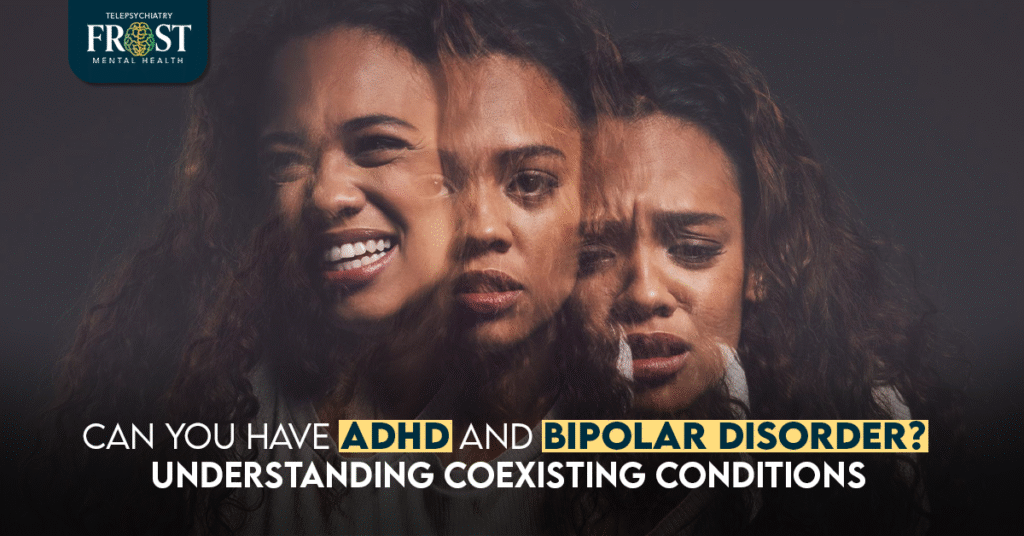
Managing one mental health condition is hard enough for anyone.
But what if instead of one disorder, your brain deals with two conditions at the same time?
If you’ve been curious if someone can have ADHD and bipolar disorder at the same time, the answer is yes. Many others share your experience.
Exploring the way these disorders interact is not just a matter of curiosity.
Being diagnosed correctly, receiving treatment that helps, and returning to your usual routine are what count the most.
So, what can we learn from science about this relationship?
The answer is yes.
It is fairly common for both ADHD and bipolar disorder to affect the same person, according to many studies. Experts refer to this as comorbidity.
Research suggests that about 9.5% of people with bipolar disorder are also diagnosed with ADHD. The rate could be higher in certain groups.
And it is not coincidental that this occurs. Scientific research in neuroscience suggests that both ADHD and bipolar disorder result in changes to the brain that are similar.
These conditions both affect parts of the brain that control our focus, impulse control and emotions—all essential for our regular activities.
This relationship goes in both directions. You might be more likely to get bipolar disorder if you have ADHD, and bipolar disorder may intensify ADHD symptoms.
Careful attention is needed because there are many different aspects.
Every year, 7 million U.S. children aged 3 to 17 receive an ADHD diagnosis, which equals approximately 11.4% of such children.
More than a million people around the world suffer from bipolar disorder, which causes significant levels of disability and death.
When these conditions overlap, the impact on daily functioning can be substantial.
When these conditions appear together, a person’s everyday life can be seriously affected.
According to studies, 2% to 23% of children with ADHD also develop bipolar disorder, so it’s important to give them treatment that matches their needs.
When these two health concerns happen together, the resulting symptoms are sometimes hard to understand. The following appear in most cases:
ADHD symptoms are contextual and situational, but bipolar symptoms are not triggered by external factors.
The difference makes it easier to get the correct diagnosis of the condition.
Having both conditions can make it tricky for a doctor to accurately diagnose you; a good one will take time and be patient.
ADHD leads to repeated, lasting symptoms, while bipolar disorder allows individuals to have a stable mood for some time before moving into depression or periods of intense high energy.
Because the signs overlap, it is often hard to identify the underlying condition. Both of these illnesses may include the following:
Expert care often includes asking questions about symptoms, following how moods change, and, occasionally, performing tests to identify the correct illness.
This stage of planning is needed for effective treatment.
Both conditions should be managed at the same time, using a team effort.
Most doctors use mood stabilizers as the main form of medication for treating someone with bipolar disorder and ADHD.
Every person responds differently, and it usually takes some time and adjustments to find what really helps.
Being diagnosed with ADHD and bipolar disorder doesn’t set limits on what you can do; it outlines what treatment you might require.
A lot of people succeed in controlling their conditions if they seek good medical care, rely on a good support group, and choose healthy coping methods.
Successful management depends on certain main principles:
Learning about both conditions is essential. Knowing your symptoms, the things that trigger them, and useful tips for coping gives you greater control over your treatment.
When you suspect a diagnosis of both ADHD and bipolar disorder, you should see a specialist. Don’t try to determine or manage these conditions by yourself.
Proper and fast diagnosis early can help you see an improvement in lifestyle and long-lasting benefits.
Warning signs that warrant immediate professional attention include:
At Frost Mental Health, we specialize in complex cases involving multiple mental health conditions like ADHD and bipolar disorder.
Since our specialists have experience with dual diagnosis, they can plan your treatment and address your unique issues.
Don’t let it stop you from getting proper support since diagnostic confusion or complex symptoms are not reasons to delay care.
Contact us at Frost Mental Health and set up an evaluation.
Yes, bipolar episodes often lead to increased problems with ADHD.
During mania, acting spontaneously and moving about a lot may become tougher to control.
Having ADHD can make concentrating when feeling depressed so tough that just basic tasks seem impossible.
Because bipolar disorder causes fluctuating moods, using ADHD management strategies daily becomes difficult for many people.
When both conditions are active, you see an amplification and interaction of symptoms.
Manic episodes tend to make ADHD hyperactivity much stronger, causing people to be very impulsive and make poor decisions.
When someone experiences depressive episodes, ADHD’s attention difficulties seem very difficult to manage.
Symptoms of ADHD generally become more pronounced and may change a lot depending on your mood.
Yes, but having the medical team supervise is essential and stabilizing mood is done before other steps.
Usually, your psychiatrist will only start you on stimulants when your mood has stabilized.
If someone has both health issues at one time, doctors refer to it as “comorbidity” or “comorbid” conditions.
Occasionally, clinicians refer to it as a “dual diagnosis.”
No common name exists for these two disorders—they both happen at the same time and require coordinated treatment.
Virtual appointments for adults in California & Florida. We reply within one business day.
Have you ever felt like the list of things to do keeps adding up in your head and your ability to handle them lessens? If…
While a lot of people know dopamine as the 'feel good' chemical, more people are not aware of its role in mental health.Precisely, there…
Mental health care has come a long way.The surprising ways genetics can guide your mental health care are changing how we understand mental health. Now,…