The Connection Between ADHD and Executive Dysfunction
Have you ever felt like the list of things to do keeps adding up in your head and your ability to handle them lessens? If…
In crisis? Call or text 988.
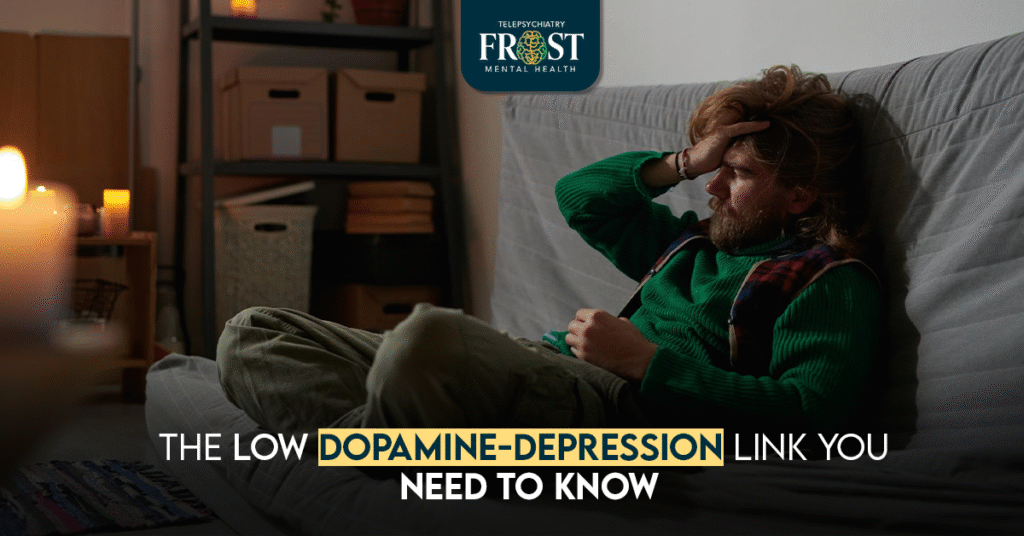
While a lot of people know dopamine as the ‘feel good’ chemical, more people are not aware of its role in mental health.
Precisely, there is an insightful and increasing awareness of how low levels of dopamine correspond to depression and the way it affects our thoughts, feelings, and actions in the course of our days.
Continue reading to get into the low-dopamine depression connection, how it affects you, and steps you can take to work toward balance.
Think of dopamine as your brain’s natural motivator and reward system.
Functioning properly, it brings that nice feeling of having meaningfully achieved something, through delighting in a tasty meal, or having moments of connection.
Dopamine plays essential part in:
When your levels of dopamine are low, they can adversely affect your day-to-day life. You might notice:
Although depression is multifactorial and seldom occurs due to one factor, studies support the link between dopamine dysregulation and depressive symptoms.
When there are disruptions to the dopamine signaling, the reward system in your brain will not operate at its optimal state.
This can form a negative cycle – the less dopamine activity, the less you feel motivated and the less you do rewarding activities, and further contributes to the drop in the levels of this chemical.
This is not just the lack of adequate dopamine.
It’s more about how effective your brain’s dopamine system is in terms of how receptors respond to the dopamine they get access to, and how efficiently your body processes this vital neurotransmitter.
Even though clinical depression requires proper medical support, specific lifestyle approaches may help support healthy dopamine function:
While lifestyle approaches can support brain health, clinical depression requires professional care. Consider reaching out if:
Mental health experts may assess whether dopamine dysregulation may contribute to your symptoms and prescribe adequate treatments, such as therapy, medication, or complementary techniques.
Putting things into perspective concerning the dopamine and depression nexus gives you a good understanding of why you may be feeling as you do.
This is not simply an interesting piece of knowledge but an empowering piece.
You can take informed actions when you understand how brain chemistry affects your mind.
Dopamine is only a part of your brain’s intricate emotional regulatory system. Serotonin, norepinephrine, and GABA, among others, are all essential in mood regulation.
If you suffer from a low mood continually, know that there is adequate support out there.
Frost Mental Health understands the complicated relationship between brain chemistry and emotional well-being.
Set up a consultation today and begin addressing the underlying nature of your symptoms.
Resources and Further Reading
Yes, there are available medications that will help balance imbalances regarding dopamine. A psychiatrist will indicate whether such an approach may be helpful in your case in particular.
Others see changes in a few weeks after consistent changes, while others may need longer. Individual responses vary.
Some supplements could help the functioning of dopamine, but their effectiveness is rather broad.
It is advisable for you to consult a medical practitioner before you start any supplement regimen.
That is not the case.
Low dopamine can elevate depressive symptoms. However, depression is a complicated mechanism, and it has several neurotransmitter systems, and psychologic components.
Virtual appointments for adults in California & Florida. We reply within one business day.
Have you ever felt like the list of things to do keeps adding up in your head and your ability to handle them lessens? If…
Managing one mental health condition is hard enough for anyone. But what if instead of one disorder, your brain deals with two conditions at the…
Mental health care has come a long way.The surprising ways genetics can guide your mental health care are changing how we understand mental health. Now,…