The Connection Between ADHD and Executive Dysfunction
Have you ever felt like the list of things to do keeps adding up in your head and your ability to handle them lessens? If…
In crisis? Call or text 988.
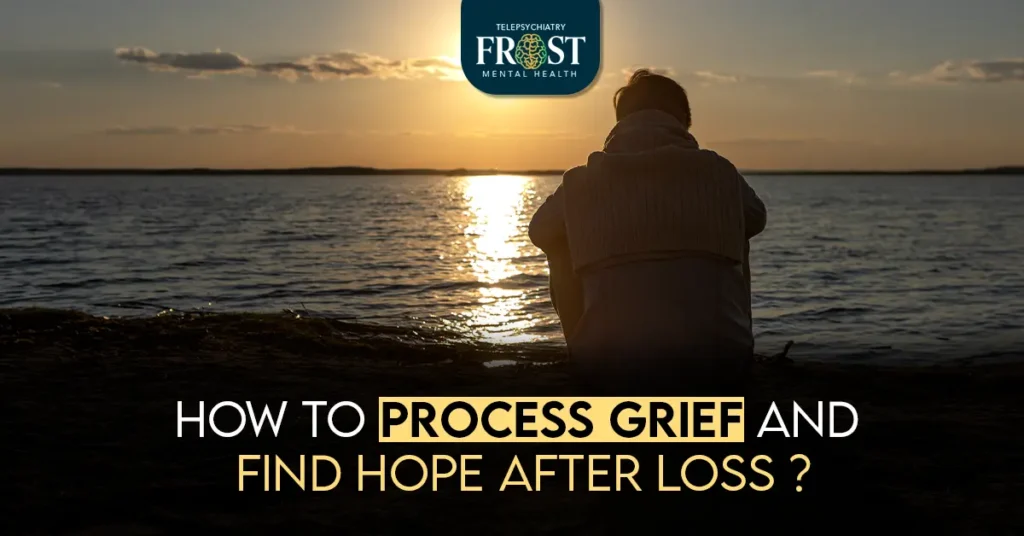
Grief is one of the most difficult feelings to experience.
It comes in waves, continually overwhelming you and seeming never-ending.
Yet, as much as the hurt appears persistent, recovery is not out of reach.
With time, grief morphs, enabling individuals to reclaim happiness and hope even after an enormous loss.
This guide provides insight into how to process grief and find hope after loss, and how to use practical steps to keep moving forward and value your feelings.
Grief isn’t something you conquer or mend; it’s something you grow accustomed to. It’s a normal reaction to loss, be it a loved one’s death, a relationship’s end, or significant shifts in life.
Everyone grieves differently; there’s no “standard” method. While some may weep daily, others might exhibit little observable emotion.
Some might immerse themselves in work; others may pull back from daily life. These variations make grief a deeply personal journey.
Acknowledging your particular form of grieving is the initial step to navigating grief and finding your way forward.
Maybe you’ve heard of grief’s stages—denial, anger, bargaining, depression, acceptance. They show how some people process their emotions but aren’t linear.
You might miss stages or go back to some. Don’t worry about the “right” progression; let yourself feel and heal at your own pace.
Here’s how these stages might manifest:
When you’re unsure how to deal with grief, breaking it down into smaller steps can make it easier.
Being kind to yourself and having patience is key, even if it doesn’t seem needed. Take note of these tips:
Suppressing your emotions doesn’t make them vanish.
Brushing off pain might feel easier, but sorrow might circle back as anxiety or depression later.
You can cry, scream, or spend time alone with your thoughts.
All these are signs of healing after loss.
Remember, the proper support as you grieve is essential.
It’s okay to lean on loved ones—a friend, family, or a grief support group, where you can let out your feelings.
If loved ones fall short, consider therapists or guides skilled in grief management. They can be your strong pillar, helping you attend to your emotions.
Coping with loss can be aided by honoring what you’ve lost.
This aids in dealing with the loss.
Regular simple acts could be lighting a candle, creating photo albums, writing letters, or celebrating birthdays.
Is it possible to find hope and grief when everything seems to be collapsing?.
Healing may require time, but the simple answer is affirmative.
Amidst the pain, hope can often be found, even if it doesn’t seem that way.
Small moments—like laughing at a memory or rekindling joy in uncomplicated tasks—are signals of recovery.
Embrace the current moment to anchor you in times of deep sorrow.
Engage in mindfulness practices like taking deep breaths,writing in a journal, or simply basking in nature.
Not only does it offer a reprieve from distress, but mindfulness also lets you cherish life’s little pleasures, providing peace in testing times.
Planning out the future might seem impossible when you’re overwhelmed by grief.
Don’t overdo thinking about the future; instead, enjoy easy wins—making your bed, going for a walk, or cooking a meal.
These minor triumphs prove that even changed life keeps going.
When grief remains unyielding, don’t hold back from getting expert advice.
Therapists trained in healing after loss offer non-judgmental environments for you to express feelings you’re hesitant to share with friends or family.
Never forget, seeking help is an example of courage rather than a sign of frailty.
Striking a balance in navigating grief and fostering hope after loss is key. Recognize your grief and allow yourself room to flourish and seek joy again.
Even if grief changes us, it doesn’t need to serve as our life-long label.
It’s possible to honour your loss in a manner that lets you embrace the future with love and thankfulness.
Loss often feels like losing control.
Yet, by focusing on what’s in your hands—your health, actions, or answers—you equip yourself to face each day.
Small habits like getting enough sleep, eating good food, or limiting drinks can boost emotional strength.
Surviving grief involves understanding its impact on relations. Loss can either stress relationships or deepen them as we lean on each other for support.
Truth and openness matter most during this time.
Just as crucial is mending the relationship with yourself. Loss alters us, sometimes making us question our identity.
Rediscovering hobbies or embarking on new adventures can help unveil your life’s next phase.
Friends and family give helpful emotional aid, but a professional therapist can guide you deeper.
They know how to aid people in dealing with loss and finding ways to regain hope. If things are stopping you from moving on, they can spot them.
Sometimes, we focus on “being tough.” This can make true recovery hard.
A therapist has methods for emotional release and reassures you that your feelings are okay.
Knowing that someone is trained to provide sufficient support during grieving offers comfort.
Finding a balance between grief and hope takes time.
Remember, hope isn’t about denying your loss or pretending it didn’t happen. Hope believes that life, though changed, can still contain joy and meaning.
Grief isn’t a course you complete—it’s a process.
The love and lessons remain from your loss, yet the sorrow doesn’t have to be permanent.
Figuring out how to navigate sorrow and discover light after goodbyes requires self-kindness, a readiness to mend, and belief in a brighter tomorrow.
If you find it challenging, Frost Mental Health is standing by.
Our empathetic team has expertise in grief and emotional recovery, providing personalized treatment suited to your situation.
Reach out to us today to get started.
Virtual appointments for adults in California & Florida. We reply within one business day.
Have you ever felt like the list of things to do keeps adding up in your head and your ability to handle them lessens? If…
Managing one mental health condition is hard enough for anyone. But what if instead of one disorder, your brain deals with two conditions at the…
While a lot of people know dopamine as the 'feel good' chemical, more people are not aware of its role in mental health.Precisely, there…