The Connection Between ADHD and Executive Dysfunction
Have you ever felt like the list of things to do keeps adding up in your head and your ability to handle them lessens? If…
In crisis? Call or text 988.
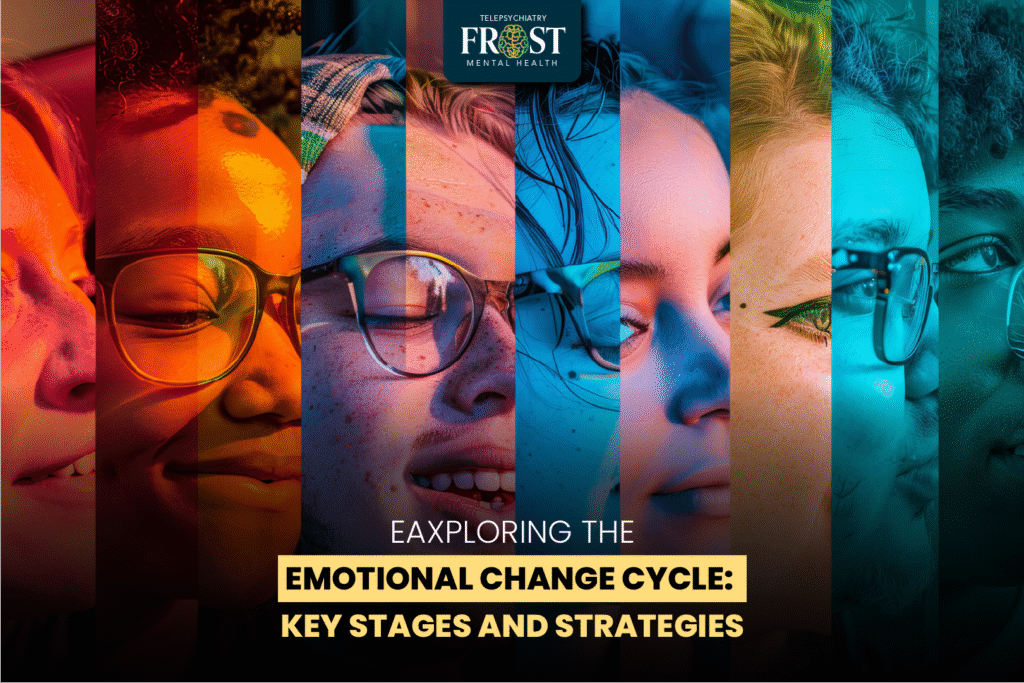
Cycle of change is a part of life. It is unavoidable. It often brings a mix of emotions that can feel overwhelming and disorienting. A major life event, like a career shift or the loss of a loved one, can trigger a strong emotional response. So can a personal transformation, like overcoming an addiction.
This response follows a pattern called the Emotional Change Cycle. This cycle can help us understand our change emotions. It can also give us strategies to manage change better.
We will explore the emotional change cycle. It will cover its key stages, emotions, and transition strategies.
Frost Mental Health provides personalized care. They use advanced tests of neurotransmitters and hormones. They diagnose and treats mental health issues.
The emotional cycle of change is commonly divided into five stages. Each stage reflects a unique emotional response to change. Everyone’s experience may differ. But most people go through these phases in some form.
The first stage of the emotional change cycle often begins with denial or shock. Facing an unexpected, tough change can make it hard to accept reality. This reaction is a defense mechanism. By denying the change, we protect ourselves from its pain or stress.
Once the shock wears off, the reality of the change sets in. This often leads to anger or frustration. Some may resist the change. They may focus on their losses. This can lead to blame, irritability, or outbursts. This stage is crucial. It reveals deep emotions about the change, like fear, anxiety, or sadness.
In the bargaining stage, individuals may begin to dwell on “what if” or “if only” scenarios. They may try to negotiate with themselves or others, hoping to avoid the full impact of the change. This stage often brings a search for solutions. It also brings guilt and regret over past actions.
After bargaining fades and reality sets in, many reflect. They often feel deep sadness or depression. This stage brings a sense of loss and helplessness. The change feels overwhelming. It can be the hardest part of the emotional change cycle. But it is also a time for introspection and emotional processing.
The final stage of the emotional change cycle is acceptance. At this point, individuals have fully come to terms with the change and have started to adapt. This doesn’t mean all negative emotions have vanished. Acceptance brings peace and allows us to move on. The change is no longer viewed as a threat but as a part of life’s journey.
Experiencing emotional change cycle is a normal day. However, it can be challenging without the proper resources. Here are some extra methods to help you deal with and control change.
Resilience is the ability to bounce back from adversity. Building emotional resilience can help you navigate change with greater ease. Mindfulness, a positive outlook, and support can boost your resilience.
Big changes can be daunting. So, break the process into smaller, manageable steps. Focusing on what you can handle in the short term reduces overwhelm. It also helps you make progress, bit by bit.
Approaching change with a flexible mindset is essential. Be ready for plans to change. Flexibility helps you adapt without feeling defeated.
In times of change, focus on what you’re grateful for. It can shift your view from loss to appreciation. Even small moments of gratitude can provide emotional balance during difficult transitions.
Sometimes, navigating change can feel too overwhelming to manage alone. If you have intense emotions or feel stuck in the cycle, seek help from a therapist or counselor. They can provide support and guidance.
Change, good or bad, brings emotional challenges. But you can manage these feelings by understanding the emotional change cycle. By recognizing each stage and using coping strategies, you can reduce emotional distress. You can build resilience and emerge stronger after change
Try breaking it down into manageable steps. Don’t forget to stay flexible. Reach out for help from your circle or experts if required.
If you’re feeling stuck, worried, or struggling with change, a counsellor can help. They have useful tools and guidance.
To manage change, use these strategies: resilience, gratitude, emotional awareness, and positive self-talk.
It’s different for everybody. It relies on what changes are happening and how good their coping mechanisms are.
Virtual appointments for adults in California & Florida. We reply within one business day.
Have you ever felt like the list of things to do keeps adding up in your head and your ability to handle them lessens? If…
Managing one mental health condition is hard enough for anyone. But what if instead of one disorder, your brain deals with two conditions at the…
While a lot of people know dopamine as the 'feel good' chemical, more people are not aware of its role in mental health.Precisely, there…